Sponges in the Indo-Pacific: a hotspot of endemism
Using genetic analyses, LMU geobiologists, including four MGAP students, have shown that many sponge species in the Indo-Pacific are regionally unique.
17.03.2026
Erpenbeck D., Galitz A, Berumen ML, Bütner G, Debitus C, Dirnberger M, Ekins M, Hall K, Namuth L, Petek S, Rahnamae N, Reddy MM, Rettenberger D, Ries SR, Schätzle S, Schönberg CHL, Setiawan E, van der Sprong J, Thomas OR, Tirumalasetty V, de Voogd NJ, Voigt O, Hooper JNA, Wörheide G (2026). Barcoding-Inferred Biodiversity of Shallow-Water Indo-Pacific Demosponges. Journal of Biogeography, 53 (3): e70171, https://doi.org/10.1111/jbi.70171
Several MGAP students (underlined in the author list) contributed to this data-rich study.
The Indo-Pacific is home to an extraordinary variety of marine life, but scientists still know relatively little about the diversity and distribution of many sponge species. Using DNA analysis, researchers led by LMU have found that many sponges are endemic, meaning they occur only in specific regions.
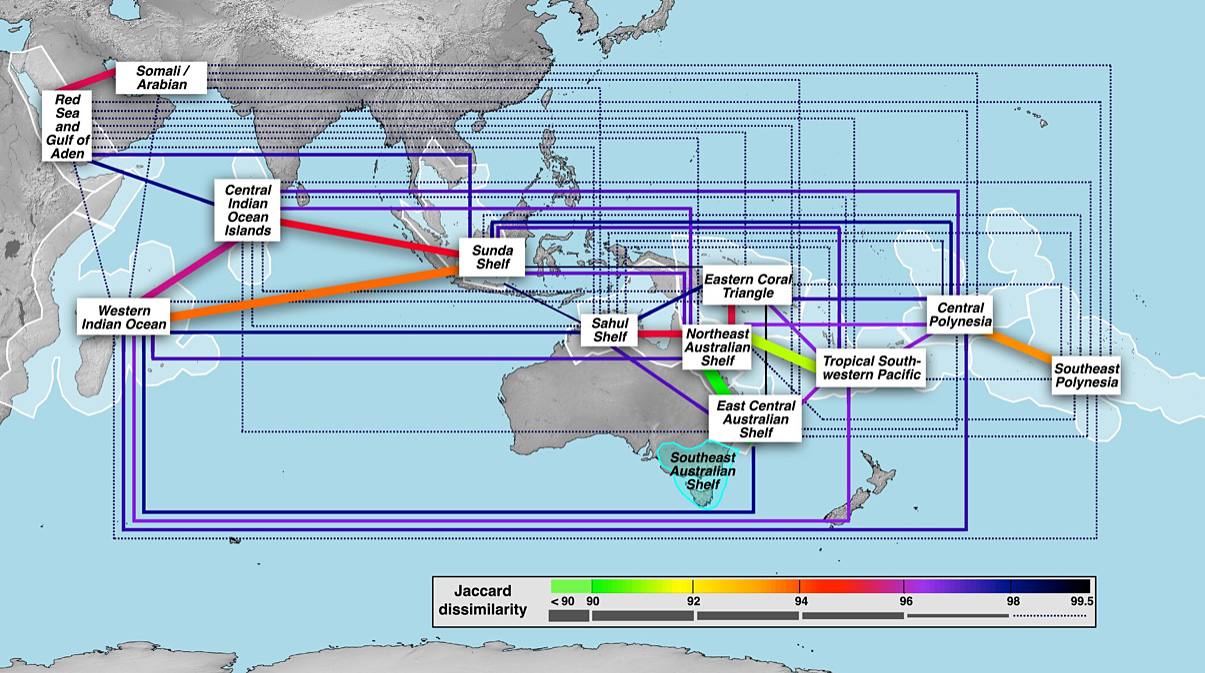
The study, based on the largest genetic dataset of Indo-Pacific coral reef sponges to date, revealed clear differences between sponge communities in areas such as the Red Sea, Indian Ocean, Central Indo-Pacific and Polynesia. One reason is that sponge larvae can swim freely for only a short time, making it difficult for them to spread over large distances.
These findings show that sponge species are much more regionally restricted than previously thought. Understanding these differences is important because sponges play a vital role in coral reef ecosystems and because accurate knowledge of regional biodiversity is essential for monitoring and protecting marine life.